Space

Space geekout time! I was recently at the Cologne Center Station and saw this:

National Georaphic Collector's Edition "Space" - Cover

It is some kind of special edition of National Geographic about space. Naturally, I bought it and boy was I in for a treat! It is awesome! Of course, it contains great photos but you expect that from National Geographic. What you don’t necessarily expect are three most astonishing information graphics.
The first one is a summary of ALL MANNED SPACEFLIGHTS so far. All on one (double-)page. The amount of information is just staggering, yet the graphic is elegant and instantly understandable. Very Tufteesque:

National Georaphic Collector's Edition "Space" - Infographic 1

The second graphic is a list of all planets and planet-like objects in the solar system. It is pretty standard but well-executed. The planets are shown to scale which is somewhat rare. Also, you get a few more exotic objects like Ceres or Eris. The only thing I miss are important Moons like Titan, Europa, Enceladus and The Moon (duh) but at least it is consistent without them. All in all very solid!

The third graphic is the centerfold. It shows all expeditions to other Planets (and to the Moon). Although less elegant then the first one, this information graphic certainly looks stunning and is something you might even hang on a wall.

National Georaphic Collector's Edition "Space" - Infographic 2

National Georaphic Collector's Edition "Space" - Infographic 2 close-up

You can see the centerfold online too! Here is the general website of this particular issue of the magazine.

EDIT: I forgot about the FOURTH information graphic which is yet another amazing highlight. You get all 260 discovered extrasolar systems compared to the solar system and with their habitable zone traced in. How cool is that!

National Georaphic Collector's Edition "Space" - Infographic 3

The magazine is well worth the money and very exciting because of the astronomy, photography, visual design and information design. It puts the most important facts about our efforts in exploring space into a beautiful nutshell. So if you see it at the magazine stand, give it a try.

In other news, the last ingredient for my Phil Plait Voodoo doll finally arrived *Evil Laughter*.

My copy of Death From The Skies

Night Work

So the Excit Project is pretty much wrapped up. I’ll post the link as soon as it is online. I’ll also might write a post-mortem on the old Excit soon.
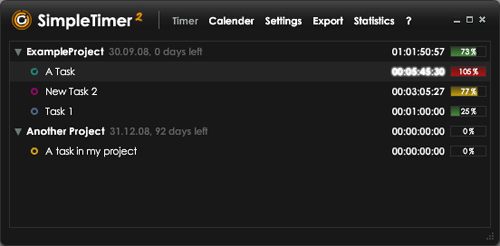
In case you’ve been wondering what I was doing for the last few days, I can tell you right now pretty precisely, thanks to the excellent Simple Timer 2 Tool I introduced some time ago. There you go:

Excit AS3 Recode - Timetable

The blue and green boxes at the beginning is the work required just to make the game run. After that, I had a 1:1 copy of the old Excit running in Action Script 3.0. All it was lacking was ANY sort of user interface. So it was not possible to select levels, upload highscores, even reload the level or see how much moves you made. That’s what the big purple boxes in the middle are all about. Finally, the red-purple and teal boxes at the end are about bugfixing and little details like preloaders, little gimmicks for beating the game etc. Not tracked is the playtesting session at Thursday. Also not included is the level design because it was done by my colleague Daniel Renkel. Do you also track your Time, Daniel? I’m curious how much Time went into the project in total. Right now, I’m on 88 hours and 50 minutes excluding the playtesting.
I’m a bit baffled about how little time it required to make the game run and how much time went into the mundane interface stuff. It may be because the interface stuff is really boring and I’m less motivated so I work slower. Also I sure have a preference of working in the night. I do enjoy the darkness and the quietness of it. Still, it might be not healthy. o_O
So anyhow, with that one wrapped up, I’ll use the weekend to catch up with my E-Mails and the next week it’s finally back to Illucinated again. I’m excited!

The Power of Animation

I’m currently doing a quick re-write of my old game Excit. Just wrapping it up now so I can get back on track with my other projects like Illucinated. I have already written how surprised I was about it’s success. After one year, we have over 2,5 Million players. And that’s not even unusual for a flash game. I know that much cruder games can be even more successful. I guess that’s because of the big pond we are fishing in.

Interestingly, when re-writing the code for AS3.0, I took a different approach from back when I was writing it the first time. When I did it the first time, I had cool animations even before most of the gameplay elements worked. This time, I made sure the game mechanics work and cared about the little special effects and animations later on. So now I was able to see the game in its “raw” state. The result was an eye opener. The game is severely less fun without the squishy cursor effects. It seems like they make up a very big part of the fun.

I’m currently playing the GBA Castlevania Series and noticed a similar effect. The game itself is rather repetetive and boring. The graphics aren’t even what you would consider “beautiful”. However, the animations are really smooth and extremely detailed. The result is pure, addictive fun. I can spend the whole day watching Skeletons explode into particle fountains of tiny bones, zombies melt away into smooth hand-pixeled puddles and demons turn into miniature galaxies of fireballs. Even the character animations have lots of details with a high frame count and an obsessive amount of secondary motion.

       
See here for more Castlevania Animated GIFs

So the lesson is that well done animations can MAKE the whole game. I guess it is a good idea to take care of the animations very early in the game design process. You might think that a game that is fun without cool animations, it will be even more fun if you add them at the end. However, you might force yourself into over-designing the game while all it needed was just a little bit of juiciness.

World Cyber Games 2008

I didn’t post for a while since I was involved in a quite demanding project. Here an update. I visited World Cyber Games 2008 a while ago. I took some photos. You can see them here.

WCG 2008 Entrance

It was different from what I expected. First, it was much smaller then I thought. It was just one hall and there was not a lot of people. Especially if you compare it to Games Convention. Esports still seems to be interesting only for quite the niche audience. Also, the overall presentation of the matches was lacking. For somebody not familiar with the rules, the matches are almost incomprehensible. I can understand that online but I thought they would would do something different when going in front of a live audience. Too bad since I wrote about that in my intermediate exam at KISD and it still has not changed since then.
The general experience is that you walk into a hall, there are a lot of fenced-off islands of computers. The islands are empty except of maybe one guy playing. And then you have a small crowd behind that single guy. You have no idea who he is and what he is doing. Practice? Then, there are two big stages and if you are lucky, you will accidentally stumble into a somewhat important match. I haven’t seen any schedule anywhere but then again I wasn’t looking. We saw a bit of the Counter-Strike Quarter-Finals and a bit of one of the Warcraft III Semi-Finals. Warcraft III had a huge audience (for a change). Counter-Strike was more interesting but still didn’t work anywhere as well as real sports. Sudden, random cuts between different perspectives made it impossible to understand what was going on.
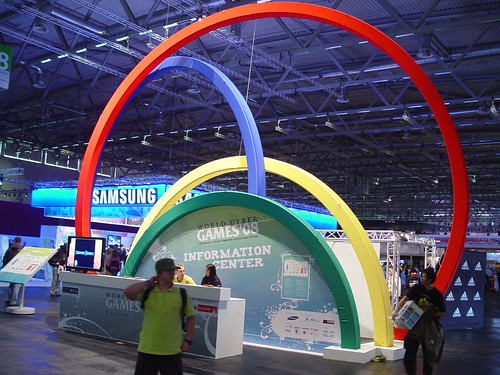
But then again, there was this cool but useless Colani Truck

Samsung's Colani Truck Panorama

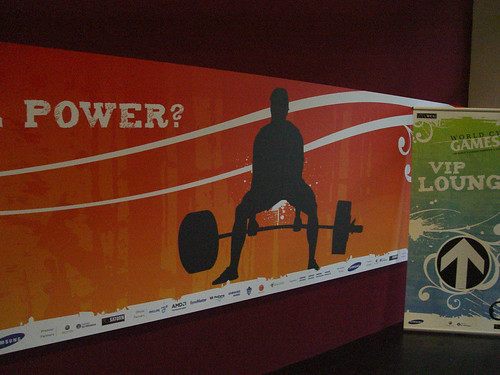
and I found that hilarious (I even sent it to Photoshop Disasters but they didn’t feature it yet and they featured it!).

WCG CI Disaster

On other news, I just finished Dr. Bloodmoney by Philip K. Dick (In Germany, there is a very cool Philip K. Dick collection I’m … collecting). I found it interesting. Quite Akira-esque at the end which is impressive since it was written in the 60ies.
The thing I read before that was Lem’s Fiasco. Now that was a disappointment (ha-ha). I heard so much about it and was expecting some serious revelation. What I got was some descent, standard Sci-Fi but as far as world-changing literature goes, Solars is THE book to end all Sci-Fi. Don’t get me wrong, Fiasco wasn’t worse then, say, Dr. Bloodmoney. I just had my expectations pretty high up.
So right now, I’m reading Snow Crash. Filling my voids one by one.

Games killed the TV star

I’m currently taking part in an interesting program. It is a mentoring program for Audio Visual Talents in North Rhine-Westphalia. Basically, the state government of NRW realized that people seem to prefer to get their audio visual education in NRW (Cologne, Düsseldorf, Bonn) but move to Hamburg or Berlin afterwards to have their careers there. The program brings some young, smart people and some well known, experienced folks together in order to help the newcomers to get into the media industry without moving.
I generally like the way how different media and different professions were brought together. There were a some TV-guys, some film-guys and some radio-guys. There were even … like 1.5 games-guys.

I noticed that a lot of the radio-guys talked about how the times are tough and they are doing Podcasts now. This made me think. When I was a Kid I remember that my grandma listened to radio. I mean she really LISTENED to radio. She knew when a certain program was going to be aired, she sat in a chair in front of the radio and just sat there and listened for an hour or so. And it wasn’t music, it was people talking. I found that odd. My parents pretty much ignored radio.

So for me, radio is QUITE a dead medium. The only context where I do sometimes listen to radio is in the car but that’s only because it is a convenient way of getting music. If there was no such thing as radio, I would just throw in a CD or something. In fact, I sometimes do because I can’t stand radio commercials.

So I’m a bit concerned if the experience of the radio-mentors will be of any help for me. I’m still glad I can participate in the program and I’m open to anything. And at least I can relate to their work because I do enjoy Podcasts frequently. But I wouldn’t call them radio. It is on-demand, thematically more focused but formally more relaxed. I consider them as a cross-over between radio, telephone conversations and audiobooks.

Here is a thought that I had for some time: when I will have kids, they think about Television the same way I think about Radio. After all, even I don’t really watch TV all that much so why would they? Sure, they will watch movies and maybe some series but actually FOLLOWING the TV program and tuning in live? I doubt it.

Constellations don’t work

I have received a lot of positive feedback for my recent map of the interstellar neighborhood. A lot of people gave me some great suggestions for how to improve the map and I’m certainly motivated to work some more on it.

One thing a few people suggested was to implement constellations. Well, I knew it doesn’t work as good as people think because I have seen this feature already in a similar tool called HippLiner. To make my point I have recoded my map to show only the stars of the Leo constellation. Note that those stars are much further out and the scale has been increased so each grid is now 20 light years. Check it out here.

Interactive Map of the Constellation of Leo

So what do we learn from it? (More after the Jump):

Continue reading “Constellations don’t work”

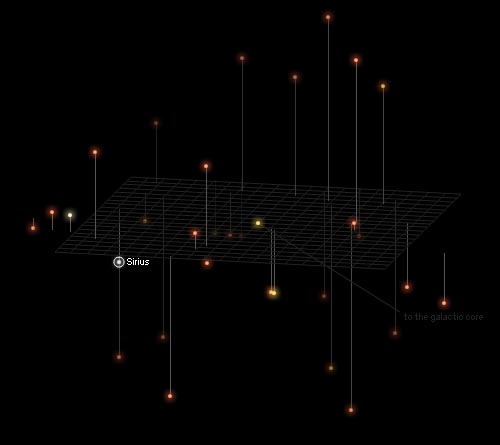
32 Nearby Stars

As we have already established, game designers are space geeks. So recently I geeked out and did this during one long night.

32 Nearby Stars

You can try it here.

It is an interactive 3D map of our interstellar neighborhood. Here is what inspired me to do it and why I spend my time doing it:

Continue reading “32 Nearby Stars”

Donkey Kong (GB)Sp

Ha! My newest eBay purchase just arrived. It’s Donkey Kong for the Nintendo Game Boy. No, it’s not Donkey Kong Land nor is it Donkey Kong for GBA. It’s just Donkey Kong for the old GameBoy. You might not know it but it is one the most awesome games on the system.

Basically it seems like a simple remake of the old arcade machine. It even starts of with the 4 classic Donkey Kong levels. However the original arcade game was over after the 4th level. This one has 97 more levels after that! I love that kind of old-school approach. Establish some very basic, simple rules, stick with them and deliver masses of content. I would even classify it as a sub-genre: “the non-scrollable multi-level jump & run”. The first game of this kind was obviously Lode Runner. Other classics include Bubble Bobble and the less-known Bill & Ted’s Excellent Adventure. There are even some contemporary games like n+ which follow the formula.

This kind of game design strategy works well even if the difficulty doesn’t increase. Overcoming the sheer amount of levels is challenge enough and you certainly feel as if you get a lot of value. Of course, today the game is ridiculously underpriced. I got mine for 5€ including shipment. If you see it somewhere in a second-hand store, I recommend you give it a try!

SimpleTimer 2

Recently, Lars Gerckens released the Simple Timer 2. It is a very simple and stylish tool for organizing projects and measuring how much time you spend on them.

SimpleTimer 2

Basically, the screenshot says it all. You define a project, define a to-do list of tasks for each project. You estimate how much a given task will take. You click on a task when you begin working on it and click again when you quit. The tool will log your time, give you some statistics, tell you if you underestimated the work, etc. I actually made a concept for a similar tool once but mine was supposed to be a physical product.

If you work as a freelancer or generally do your own work on a project basis, logging the time you spend working is actually an essential part of the daily routine. I found at some point it made the work even harder because it was yet ANOTHER barrier you had to overcome when you started working. As if the work alone wasn’t daunting enough. The previous Version, Simple Timer already was quite useful as it automated that little part and even made it a bit exciting with spiffy animations and such things. The new version has less spiffy animations but is certainly more flexible and useful. There is a nice calender view and Excel export but what really makes that one stand out is the ability to define tasks.

There are still some problems with. Every time you use such a tool you need to adapt to a certain philosophy inherent to it. So in Simple Timer 2 you HAVE to define a deadline for a project and you HAVE to estimate how long a task will take and you HAVE to describe what you just did every time you stop logging a task. Actually, that last dialog has even a nasty button – pressing “cancel” on that dialogue will delete the log you are about to stop and potentially delete an important entry. But those are minor details you get used to pretty quickly and future versions might be more flexible.

Simple Timer and Simple Timer 2 are also the first two Adobe AIR applications I’ve used. I’m actually quite fond of it. The installation is smooth. The applications can do advanced things like have Tray Icons with menus. Adobe AIR even automatically checks if there is a new version of an application available and automatically upgrades it if necessary. Apart from that functionality, AIR itself remains invisible and the applications work like every other program out there. So far: good work, Adobe!

Videogames in other Media Ep. 1

Recently, I’ve been watching the first four Episodes of the new TV Series “The Mentalist”. It is a series about a guy who was once a mentalist but due to a personal tragedy, decided to quit his profession and use his skills to help the police solve crimes. The cool thing is that the series is realistic so the guy doesn’t really have special powers. Instead, he uses some his charisma and his excellent observation skills to trick people. I like the series very much. It is smart, sometimes funny, very intriguing and refreshing. Kinda like my favourite House M.D. but the lead doesn’t quite compete with Hugh Laurie. Then again, who does?

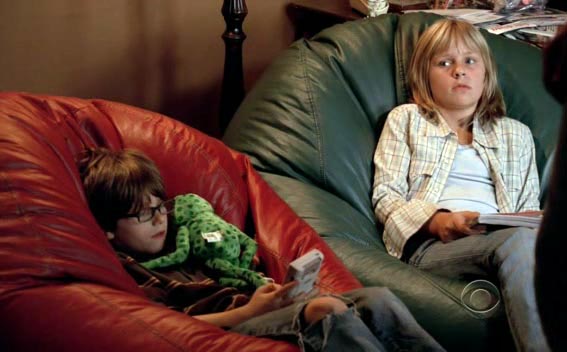
Videogames in other Media Ep. 1

Anyway, what bothers me is how games are portrayed in other media. So although The Mentalist is a good series there is this one scene where some kid is playing a videogame and it is clearly an old GameBoy. What the…?! Is this supposed to be a historical piece?

My guess is that the script called for a generic gaming device and they didn’t want to use a contemporary one because the didn’t get a product placement deal. Or they didn’t want one. Or they didn’t care to get one.

I find this quite disappointing because I think it shows how games are underestimated by other media. They aren’t seen as something with subtle meaning. They aren’t seen as something which can be used to flesh out some details in a character. Instead, the whole medium is put into a huge drawer with labels like “childish”, “silly”, “immature” and “waste of time” on it. So it doesn’t matter WHAT the kid is playing, it wasn’t the point in the first place. That’s why it doesn’t matter if he is playing an unrealistically ancient system. You know, if one of the characters would be reading a book or watching a movie, they would certainly make sure the title or at least the genre is matching the character or the plot.

I would like to start collecting some examples of how videogames are treated in other media. I already have some scenes in mind (House M.D. has some nice ones) but if you know a good example, don’t hesitate to drop me a line!

P.S.: Speaking of product placement – I have set up a “Currently Playing” column at the right. It will show the games we are currently playing. Yes, those affiliate links. However, I find this kind of Ads rather helpful because it is relevant to the blog’s content. Tell me if you find the Ads unbearable.

About

The Game Design Scrapbook is a second blog of group of three game designers from Germany. On our first blog, Game Design Reviews we describe some games we played and point out various interesting details. Unfortunately, we found out that we also need some place to collect quick and dirty ideas that pop into our minds. Hence, welcome to Game Design Scrapbook. You will encounter wild, random rantings. Many of then incoherent. Some of them maybe even in German. If you don't like it, you might enjoy Game Design Reviews more.

Twitter

follow Krystian on Twitter
follow Yu-Chung on Twitter
follow Daniel on Twitter