Indie Gamer Forums – interesting Thread(s)

I like to point out the following thread in the Indie Gamer.com forums. It’s about the current state of the indie industry:

http://forums.indiegamer.com/showthread.php?t=11302

i also like to take the opportunity to point out, that managing the german “free” unterhaltungs software forum together with some others at www.usf.de, i really love the forums at indiegamer. i often hate the feeling and level of talks we germans have in the usf or other official german game-dev / indie discussion boards.

the level of quality people (quality in mind, kindness and being able to express their thoughts in a usefull manner) in this forum is realy high.

i think i will try to use this game design scrapbook “page” for further posting comments with interestint threads in the indiegamer (or similiar) forums.

Indie Game Developer’s Podcast Digest

Recently, I’ve listened to ALL the interviews at http://www.indiegamepod.com. They are all fascinating and a great way to get an overview of at least a part of the scene. At some point, there was just so much interesting stuff that I started writing things down. Here are my notes, they are very messy and a bit personal and although they sound sound maybe a big negative, I assure everybody who reads this that I am very fond of each and every interview.

Before we get into the interviews some summary of important topics that I found often reoccurred:

- Nothing beats a finished product. If there is one thing that everybody agrees upon it’s this. Almost everybody said that. Someone even said that just releasing a game, no matter how good or bad it is puts you automatically in the top 10% of the scene. Working on a game and quitting it somewhere in-between is the worst thing you can do. You loose work, time, confidence and miss experience exactly from the kind of phase which makes all the difference: the last mile and beyond. You not only loose this game but also diminish the chances of getting the next game done. So aiming for many, small and simple products seems to be the best strategy. I had to think about Daniel and his “starter”/”finisher” idea. Are you reading this, Daniel? ;-)

- “Heart” beats Innovation. That’s a complex issue mentioned by some people. Innovation is often considered as the holy grail of game design. But just a smart game doesn’t always do it. It is rather more important to put a lot of effort into it and use it effectively to express something, even if the game is otherwise just a clone. This is actually the one big advantage of indie games over the big industry – the fact that they can be very personal and bold and made in a way no one else could because they wouldn’t dare or care enough. Instead indie game developers tend do imitate the neutral, “slick” style of the AAA titles because is associated with “quality”. It is an mistake I did with my animated movie and I intend never to repeat again.

- You need to play games constantly. Quite the few people stressed out that you need to play games, good ones and bad ones and pay attention to the details. Having started Game Design Reviews, I guess we can say that we already vigorously adopted this approach. ;-)

Anyways, on to the individual interviews:

Continue reading “Indie Game Developer’s Podcast Digest”

What are games good for?

A question that bugs me is: why should we be making games? What are games good for? Should we be making games at all? I think this question is fundamental for game design. After all games could be just a waste of time for game designers and players. The relevance and value our your work as a game designers is directly related to how well and convincing we are able to answer this simple question. “Because it is fun and entertaining” is not an answer, mind you, just like the reason for why food is important is not just “because it tastes good”.

Recently, I saw this Will Wright presentation of Spore at TED. I guess we have all seen Spore already so it’s not that big deal. However, what I find extremely important is what Will says about WHY he is doing Spore.

To quote him from 12:16 in the Video:

(…) we actually mapping, using the game to remap our intuition. It’s almost like in the same way telescope or a microscope recalibrates your eyesight. I think computer simulations can recalibrate your instinct across vast scales both, space and time.

I like that point of view although I think you can break it down even further: Continue reading “What are games good for?”

FFXII Diary: License System Usability Issue

Remember how I complained about the lack of shop during a rather early phase in the game? Ironically, around the corner of where I stopped last time, there was a merchant.

Anyway. Yesterday I managed to play a bit more. Slowly the usual RPG addiction kicks in, but the whole Licence system is not knocking me off. I like how you can see the adjacent tiles and get an idea of both the immediate choices and which direction might bring what.

What I don’t like though, is how the actual upgrade process goes. Since you can activate way more licences than upgrades are available, it is recommended (by the game itself) to wait and check for the available items first, instead of buying the licenses first.

The problem is, you can’t see your possible next steps while shopping.

Continue reading “FFXII Diary: License System Usability Issue”

Critique: The Chemistry of Game Design


Recently, Daniel Cook aka Danc from Lost Garden wrote another essay on Gamasutra. It is very interesting. Danc compares Game Design to alchemy and urges to develop a more systematic approach akin to chemistry. I certainly agree that we need to work on a theory of game design. However I am a bit concerned that the model he proposes might have some flaws. Here is a list of comments on his essay:

Continue reading “Critique: The Chemistry of Game Design”

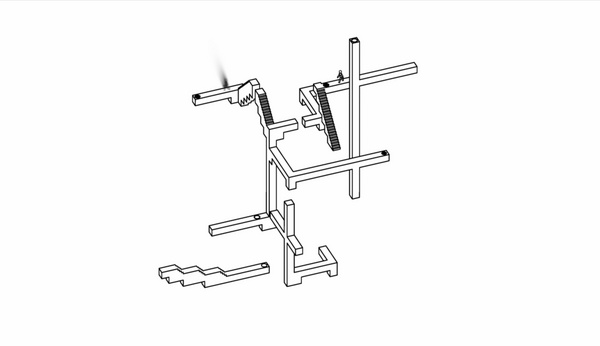
Echochrome

If somebody asks me what was the nicest thing i saw from E3 2007, i can clearly answer: a 3d game for PSP and PS3 (probably downloadable), called “Echochrome”.

Continue reading “Echochrome”

Sprout

Yet, another indie game. This one is very short and quite nice. It is called Sprout and made by Jeff Nusz. It is about the journey of a seed. Quite creative!

I’m fond of all the little sound effects and the parallax scrolling. Gameplay-wise I like how you even get new abilities and how effectively it enriches the experience. It’s almost Metroid in a nutshell. My only remark would be that there is not much game here. It’s a series of very few and very simple choices. Compared to that, there is a lot graphics and sound effects involved. Little interactivity, lots of assets. It seems a bit inefficient and unbalanced.

Still, it’s short, innovative and I enjoyed it very much.

Gesundheit!

Recently, I start looking at indie games to prepare myself for my diploma. Here is a nice one I’ve stumbled upon. It’s called “Gesundheit!” and it is made by Matt Hammill. The gameplay is solid – it’s sneaking with a nice (and funny) twist. The thing that strikes me is the amazing quality of the artwork. It looks like drawn with crayons, yet there seems some computerized post-processing involved . The result is stunning.

However, although it is very exciting to see fresh eye candy, I ask myself if such visual strategy is a good idea. It makes the game look quite infantile after all. Playing it, I found myself feeling too old.

P.S.: Nice business card!

FFXII diary. Strange pacing

5 hours into the game (yeah I know. 5 hours in almost a week is not much. Am I a casual now?)

Anyway, so far I find the pacing a little odd. After a couple of short, introductory quests in and around the first big city (can’t remember the name), I commenced a moderately long quest (long for the early phase I’m still in).

Although the game warned me that I couldn’t go back for a while, I find it strange that Squarenix decided to put such a part at this point in game. During this quest I’m still in, there’s no possibility to buy new stuff, making all the License Points pretty much useless – unless you knew what upgrades you want beforehand. And asking uninformed decisions from the player is never a good idea. But even if I knew, i didn’t have enough money, plus leveling/saving was not an option so early on.

Short explanation on how the License system works. In order to upgrade, you need to 1) own the object to use and 2) have enough LPs to activate the corresponding tile on the License Board. You need to monetary buy magic spells, weapons, equipments etc in a shop (or find them in treasure boxes), then buy the “right” to use it on the License Board.

In RPGs it is essential to upgrade in a certain rhythm (today, the genre is defined not by playing out personalities of characters, but by having multiple, growing stats) and especially in the early phase when the player needs low hanging fruits, and also to better grasp the concept of License board and gambit. In the last 2 or so hours, I didn’t have any meaningful new growth.

I’m guessing that the learning phase for the License Board is over when I entered this first long quest. During this quest I got introduced to the Gambit System. Maybe the game is trying to keep the Licensing low right now so the player can concentrate on the Gambit. But the Gambit options so far are few and so there wasn’t much to accommodate to.

Fighting has been rather arbitary, mainly due to the lack of new skills. All I can do now is to physical attack the hell out of enemies. Trading hitpoints, no strategies, even with bosses. The only difference would be: I needed to manually heal and revive my group.

Maybe a couple of nice words: Top notch production value. Nice cinematography and just stunning graphics for the 7 year old PS2. But this you heard enough from your other gaming sources.

Brian Moriarty

Recently, I’ve visited the website of Jonathan Blow, an indie game designer who was mentioned by one of my heroes, Eric Zimmerman. Jonathan mentioned the presentations of Brian Moriarty.

Brian is the game designer of many games. For example, he did Loom, which I like very much. Anyway, here are the presentations:

The Secret of Psalm 46
This seems to be the most recent one. Quite nice although it is hard to understand because of the music in the background. Although highly entertaining, I find the point he tries to makes rather weak (in short “games should be awesome”). It seems like he tries to persuade his audience with razzle dazzle then to convince it with solid arguments.

Who Buried Paul?
This one is very nice. I couldn’t find an audio version except maybe this torrent which I couldn’t test yet. It is something I also realized and which fits well to Daniel Renkel’s recent post.

“If you want your artificial characters to exhibit a wide spectrum of intelligent-looking behaviors, don’t try to program them all yourself, one case statement at a time. [...] Instead [...] Throw in some useless particulars.”

The Point is
I mention this one only because it is funny. It is from 1996 and it sure feel like it. Totally new-age, hippy stuff mixed with the strong belief that the internet is god. But kinda interesting to compare it what really happened.

Oh yeah and here is some other stuff from him.

About

The Game Design Scrapbook is a second blog of group of three game designers from Germany. On our first blog, Game Design Reviews we describe some games we played and point out various interesting details. Unfortunately, we found out that we also need some place to collect quick and dirty ideas that pop into our minds. Hence, welcome to Game Design Scrapbook. You will encounter wild, random rantings. Many of then incoherent. Some of them maybe even in German. If you don't like it, you might enjoy Game Design Reviews more.

Twitter

follow Krystian on Twitter
follow Yu-Chung on Twitter
follow Daniel on Twitter