Monster Hunter Tri Diary 5 – How I killed the Barroth

Time for Monster Hunter Tri again. I finally killed the Barroth. It was a triumph. I’m making a note here: “huge success”. It was also a good example of the Monster Hunter Tri experience.
Barroth

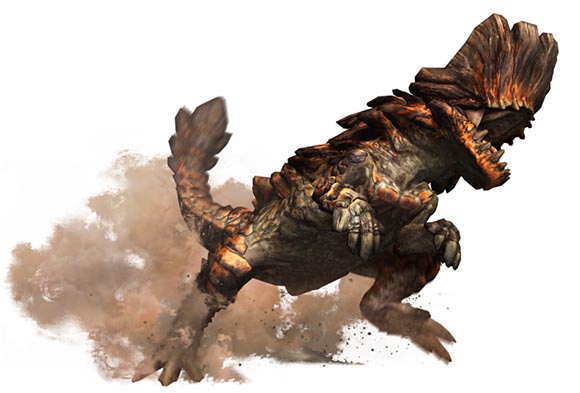
It should be obvious by now that the Barroth is one bad-ass monster. It’s basically a mixture of a Tyrannosaurus Rex and a Rhinoceros. It is constantly angry and tries to trample you over. But that’s not everything. It also bathes in mud and carries an ample supply of it on it’s back. Every now and then it shakes itself and big slabs of the mud fall. When you get hit by the mud, you get encased in it, which prevents you from attacking or blocking, slows your movement and drains your stamina. And on top of it, the Barroth simply looks scary.

I did many attempts to hunt it down. I failed many times. I got the best results with the lance because it enabled me to simply block all his ramming attacks. However, I couldn’t block the mud attack and it was always my doom in the end.

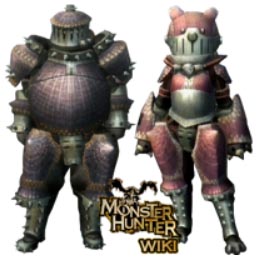
But the cool thing about Monster Hunter is that you can do something different if you get stuck. So I started collecting armor. From the beginning I sat my eyes on the Rhenoplos Armor, mainly because it looks ridiculous. It took me some time to get the elusive ingredients to craft the final pieces of it. A lot of Great Jaggi died for that one King’s Frill. I actually finished a bunch of other armors before I was able to complete this one. Imagine my surprise when I went trough the list of abilities that armor set unlocked. One of them turned out to be immunity to mud.
Rhenoplos Armor

I haven’t even noticed it. The solution to the Barroth problem was sitting right there in front of me. So I donned the new armor, took my trusty lance, set out for the desert to face the Barroth… and failed.

The armor was not the problem this time. I was able to hold out much longer than previously. However, I wasn’t dealing as much damage as I needed. Blocking with the lance leaves you only with very weak attacks. To deal out the heavy combos you need to go from the blocking stance to a non-blocking stance. That switch takes too long, the Barroth is quicker. The fight got very long. Eventually my mistakes accumulated and I lost before I could do any significant damage.

Monster Hunter is not a game where you win simply with cool new gear alone. You need to hone your skills and your strategy. You need to adjust them so they bring out the best in the equipment you use. I went back to the drawing board and realized that I still had a talisman that enabled the skill “Auto-guard”. People familiar with fighting games like Soul Calibur know the idea – your character will automatically block as long as you are not moving or attacking.

I had an idea. My new strategy was to… do nothing. I would let the terrifying Barroth trample all over me without even flinching. I would rely on the Auto-guard skill to block all the damage. Then, still in standing stance, I would turn around and execute the damaging combo.

A couple of heart-stopping minutes later, shortly before my healing potions ran out, the beast was slain. I made a new lance from its remains.
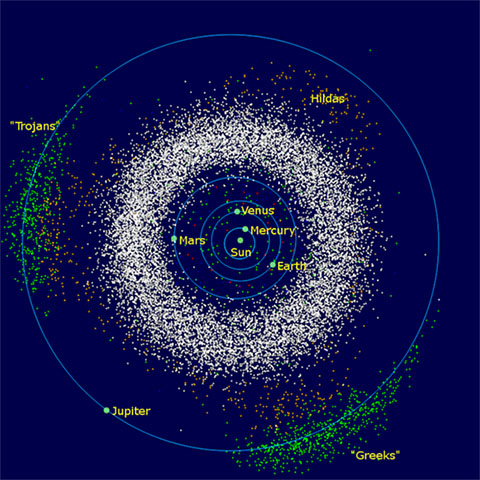
The Trojan Math Challenge

Let’s do some astronomy for a change. You may remember my older post on places in the Solar System where cool Sci-Fi could happen. You may also remember that I did a 3D map of the interstellar neighborhood some time ago. I’m playing with the idea of making another one of those. This time I would like to make a map of the asteroid belt because it is one of the places where cool Sci-Fi could happen. But mapping the entire asteroid belt is difficult. Asteroids fly around all over the place in different orbits. The map would be just a noisy swarm of moving dots.

However there is a group of asteroids that might lend itself well to mapping them properly. They are called the Jupiter Trojans. They are special because the are gravitationally bound to the planet Jupiter. They are in fact in the very same orbit as Jupiter but they follow/trail the planet at the so-called Lagrangian Points. It’s a bit difficult to explain, so I let the pro do it for me.

So the Trojans all clump around the Lagrangian Points which means that they should fly less around the place than the other asteroids. The are also closer together in general so flying from one to another should be easier rationalize in a Sci-Fi scenario. Looking from the top, it should looks somewhat like this (source: Wikipedia).

Trojans

I would like to create a map like this but in 3D and animated in order to understand that environment better. But here lies the problem. It’s not that there is a list of spatial coordinates for them. They are moving objects after all. And the orbits of those Asteroids often turn out to be… daunting. I am looking for a way to calculate this kind of data into Cartesian coordinates. Some of that stuff are orbital elements. And that’s already bad enough. Spatial trigonometry REALLY makes my brain go ka-splotch.

So here is a humble request to all math geniuses and astronomy brainiacs who read this. Can you share with me the formula to crunch this data into a cloud of points? I would be most grateful and credit you properly.

What Games Teach – Training

I’m not going to bore you with any of my Monster Hunter Tri Escapades today. Mainly because there is a Barroth out there that makes me go to a dark place every time I even think about it. Last time I remember I was poisoning bugs so I could make a sleek looking suit out of them, let’s just leave it at that, shall we?

Instead I want to start another series because it worked so well in the past (NOT!). This time I want to talk about a couple of small observations on what games teach. The thing is that nowadays we are so very much obsessed at making “serious games” – games that teach stuff. I feel that in this process we often end up abandoning the things that makes games great in the first place. And even without making the extra effort games actually teach a lot. They do so at a very low, sub-conscious level. Of course these may not be actually good things. Some of them are even dangerous stereotypes. But that’s OK, I don’t want to be too judgmental here. I merely wanted to point out some observations.

So one area where games seem to have parallels to real-life is training, especially physical training. It is a well established meme in games that your character actually gets stronger as you progress trough the game. This may be most prominent in RPGs where you literally get experience points as you fight monsters. But even in a game like Metroid or Doom you get more bad-ass as you progress, even if it is trough items. This idea culminates in the concept of “grinding” where players endure repetitive tasks because they may turn out to be beneficial in the long run. Sounds very much like physical training, right?

You see, not quite. As I have written, I have restarted doing some physical exercise myself recently. I actually already did it for a while way back when I went to high school. I was always quite interested in the logistics of it especially because they are so different to games.

I noticed that the biggest difference between grinding and real training is time.

In games you are rarely forced to wait or postpone something. Games are very good at allowing you to instantly pursue every goal, no matter what. So if you grind, you grind intensively and at a time until you are finished. Training on the other hand is about spacing out training intervals over a longer period. You want to train today but you also want to train the day after. And in oder for training to be effective you need to continue training twice every week as long as possible, ideally forever. Training is not a single event and not even a time span like grind is. It is periodic and continuous.

The other thing is that when grinding, the more you put in, the more you get out. If you want to be a super-bad-ass, you just need to grind some more and there you go. Training doesn’t work this way. You body has limits, especially as you start out. It needs rest to regenerate and grow. So training too much will yield negative results at some point.

But it is not all that horrible. Games are very good at teaching how to pursue goals and how to deal with difficulty and failure along the way. The guys from Experience Points Podcast once did a very insightful discussion about how games often put you though those very frustrating experiences. They observed that they have become quite frustration-resistant nowadays. It may have to do with the fact that especially the difficult old-school games all taught the same idea – that failure is simply part of the process. In a way, this is what is also the heart of the grind philosophy. It is the concept that enduring unpleasant experiences may be necessary if you want to achieve greatness. In some cases it is even about finding solace within those unpleasant experiences.

So games do show a very fallacious idea of how training works on the one hand. On the other hand they prepare psychologically very well for the challenges of doing training.

I assume that most of you did some kind of sport in your life at some point. I’m curious, what are your observations?

Monster Hunter Tri Diary 4 – Good Customization

Continuing my Monster Hunter Tri Diary, here is something that made me stay awake too long again. A big part of Monster Hunter Tri is customizing your equipment. The game is very much about collecting materials in order to forge armor and weapons. What I just recently found out is that different equipment provides different skills. This reminded me of my old Sword of Mana: Bad Customization article. Here is a neat in-depth tutorial how it works in Monster Hunter Tri. I mention this because this time, it’s done right:

(by the way, I recommend all the other Video Tutorials by Social Dissonance)

So a set of armor consists of 5 individual parts. Each needs to be forged separately. Each provides a set amount of points towards various “skills”. The term “skills” is a bit misleading, they are more like “special abilities”. Once the total points for a skill reaches 10, the skills gets activated. This can be simple stuff like a damage boost. It can be also something more elaborate such as automatic blocking. The important part is that having less than 10 skill points on a skill doesn’t give you any advantage.

The armor sets are designed in a way that the boost the same skills. So collecting and combining all 5 pieces gives a great advantage as many skills are pushed over the 10 point hurdle and get activated.

An interesting detail is that each piece has also slots for so-called decorations. They are very similar to Final Fantasy 7 Materia slots. Using them, you can boost an individual skill additionally by a couple of points. Some pieces armor sets provide a “base” of skill points in various areas. They aren’t enough to be active but you can activate them by using decoration slots. This fine-tuning gives you an opportunity to emphasize the same equipment differently.

And if you really want you can wildly mix pieces from different set to get exactly the skills you want.

So let us go trough my old list from the Sword of Mana: Bad Customization article to see how Monster Hunter Tri holds up in this regard.

  • Ask why – Yes, users can get different results using the system. And it makes especially sense in a game where you know in well in advance what kind of enemies you will be fighting against. Different armor setups result in different fighting styles and need to be adjusted for various enemies. As Brainygamer mentioned, 65% of the game is spent preparing for fights rather than fighting.
     
  • Immediate feedback – Mostly. You can’t start fighting immediately but as there are no dungeons or any sort of travel, you can get into a battle rather quickly. However, you can’t change weapons mid-fight. So when you made a bad choice, you need to cancel the entire quest. Somewhat unwieldy.
     
  • Certain feedback – Each item is useful. Each item can be sold. Most of the items can be even used for different purposes. Getting stuff is ALWAYS good, no uncertainty there.
     
  • Minimize choice – Well, there are a lot of choices here. But there are systems in place that help you deal with them. Individual pieces of armor clearly fit together, even visually. This guides player in selecting the right kind of gear without sacrificing depth.
     
  • Regular rhythm – The mission-based structure creates a natural rhythm. Because players can freely choose on which mission they want to go next they have a control about what kind of materials they get.
     
  • Encourage Experiments – Besides decorations, forging weapons is irreversible. However, new items are often availible in ample quantity. If you need more items you can always hunt for more. The game pretty much throws at you items from left and right, so there is plenty of room for experiments.
     
  • Logic is better then chance – Though the game contains a good amount of chance (randomized drops etc.), when it comes to forging equipment you always know what you are working towards. The skill point system is mathematically predictable. You can always calculate what effects a certain set of armor will have.

There is just one nitpick I have about it. It is pretty dry. The skill system relies on abstract numbers and fine-tuning your stuff can be a very geeky thing at times. The skill overview is literally a spreadsheet. In that regard, the old Final Fantasy 7 Materia system is still ahead. Putting colorful gems in sockets is just more sexy than crunching raw numbers. The consequence is that – like me – many players won’t deal with it at first and won’t realize the system’s potential.

But otherwise there you go, an excellent example of equipment customization. I wonder if there are more cool details hidden in the game. I will keep you posted… right after I complete that set of armor I’m collecting… just one more item…

Monster Hunter Tri Diary 3 – Qurupeco

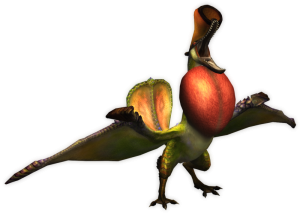
I thought I continue my observations on Monster Hinter Tri in a sort of a diary. The game got me big time yesterday. I’m recovering from it now. I was able to leave it at midnight today – yay! I think I’m at a point where I understand most of the game’s systems. I got some online play in and I have defeated 3 big monsters already, even the infamous Qurupeco. Because of Brainygamer’s post I was terrified of that one. Thankfully, due to my newly discovered favorite weapon (Lance FTW) everything went well.

Qurupeco

Freeform Hunt

Monster Hunter is so weird, it took me a while to understand how to play it. You start out in a village. You can simply walk out of the village into the wild and start slaying the local fauna or collecting stuff. This is called “freeform hunt” and I actually spent a lot of time doing it at first. Besides freeform hunt you can also take upon quests. When you do so, you are being teleported to a base camp the very same environment as in freeform hunt. You then need to fulfill some task within the time limit. The strange thing is that the time limit is quite generous. It’s 50 minutes – way more than enough for most of the quests.

I didn’t notice it at first so weary of the time limit, I did freeform hunt to gather resources. But this stopped working when a new environment was introduced. Some quests teleport you to places you can’t access via freeform hunt. So in order to gather resources there you need to do it while doing quests. The right way to play it is to take upon an easy quest and use the generous time limit to gather the required resources. Because of this, the freeform hunt is somewhat obsolete. I heard that it was a new addition to the series. It seems like this part is not really polished yet.

Online Play

I got some online play in and it works good. However, you need to jump through a lot of hoops to get there. First, the online mode is a separate game mode that takes place in a different environment (”The City”). Fair enough. You select “city” and you get 4 different categoires of servers. Within each are just a bunch of random servers. After you log into a server you then need to select a “city gate”. After selecting a city gate you actually can walk around in a level so you might think that you can play now, but no. Each city gate has a bunch of “cities”. A city contains 4 players and is somewhat like a game. You can start your own city too. So after you start a city or join one you get to an area where you can buy stuff and take upon quests. You then need to start a quest and wait for players to come to your city and join in your quest in order to play.

This is bullshit.

There are 4 or 5 consecutive layers of decisions that need to be made in order to start playing. Why? Why do I have to select a server? The game gives me no basis on which I could make this decision. It could just as well connect randomly, I don’t care which server I play on. The same goes with city gates – it’s an arbitrary decision that stems from the fact that their infrastructure is built this way. But the user shouldn’t be burdened with it!

Thankfully, once you get in a “city” the rest of the experience is rather smooth. I even got my old keyboard working. The players are generally nice and supportive. And there are indeed no friend codes which is a blessing.

Now, it seems like Barroth is next *gulp*.

Monster Hunter Tri Second Impression

I’m writing this at 4 in the morning. Like fellow blogger Brainygamer, I fell under the spell of Monter Hunter Tri. It’s a weird game.

It boils down to the obsessive collection of various items and ingredients to enhance your equipment, craft supplies and upgrade your home village. The game features various systems that provide and require items. You control a farm run by cats, you send out ships to do fishing, you trade with ships from different cities, etc. Those systems ensure that there is always some kind of reward waiting for you somewhere. It’s a perfect “just one more turn”-setup.

But it’s not just a cheap trick. So for example, the game’s interface may have a few flaws and it certainly looks daunting. However, it comes with very useful and well thought-out features. Your character has a limited inventory and you have to store items at your house. When upgrading weapons, the weapon smith automatically uses items from you house, without the need for you to fetch them. It reminds of Demon’s Souls in this regard. Small detail but such things get often forgotten.

But here is something I haven’t seen before – in every menu, you can use the Wiimote to put any missing item on a kind of a “shopping list”. Whenever you find an item from the shopping list, you get a special sound as a reminder. The list even mentions why you are looking for the item in the first place, in case you forgot (like I always do).

The battle system is much simpler than Demon’s Souls. However, it’s still very good. For example using different weapons is REALLY different. Each type of weapon comes with a very district fighting style. It’s so fundamentally different, the buttons sometimes do entirely different things. Using a sword or a great sword you can block pushing the R button. When you equip a hammer, you won’t block. Instead, the R button charges is a hammer-specific special attack.

Yet, there is one disappointment. I went online for the first time today. It seems like the US, Japan and Europe all play on different servers. So because I live in Europe, I can’t play with anybody from the US. I wonder why Japanese developers never seem to get online play right. I haven’t played much online yet but if you live in Europe and are interested in joining forces, you can find my under my usual Name – Krystman (ID: 5EKMPQ).

Master in Game Development and Research

Speaking of teaching games, I forgot to make a quite important announcement. As I already mentioned in my profile blub at the end of each post, I have been working for some time for the Cologne Game Lab. The CGL is a new institute of Cologne University of Applied Sciences. I have been helping out getting a Master in Game Development and Research program started with two very ambitious professors. After two years, we are finally accepting applications RIGHT NOW.

CGL Logo

One of the reasons I find this quite exciting is that we are really trying to do a very different kind of games education. We did a little bit of research and so far many of the programs focus very much on preparing students to be among the low-level workforces in big studios. Seeing how the games industry is slowly maneuvering itself into a creative dead-end, we believe it is time to develop alternatives. So out program has a unique artistic / scientific approach. We want to reasearch and teach strategies and skills on how to develop new ideas and concepts for games. But this isn’t a big pie in the sky. The curriculum consist almost entirely of Experimental Gameplay-style practical projects. After spending two years at CGL, the students will have produced A TON of innovative experiments and prototypes and developed a solid understanding of an iterative design process.

This is not an education to be the next UV-unwrapper for Square Enix. This is not an education to be the programmer of the pause-screen for the next Gears of War. It’s the education for the creative lead of the next innovative indie studio. It’s the education for game developers who will develop games in a time where there are no doubts on games being art – possibly even thanks to them. I – an indie myself – was personally responsible for developing large parts of the curriculum. Being able to define the shape of things to come this way was quite amazing to say the least.

So now with everything in place, all we need are students. We accept applications from all over the world. The course will be held in English and takes two years. The requirement is at least bachelor-level education in any major and a total of one year of experience in a games-related profession (this specifically includes working on your own indie game experiments). More details here. You can also get in touch with us on Twitter and on Facebook if you have any questions. Please do so. We have been working a lot to get this one chance. We can’t pull this off without ambitious students, who want to change the face of gaming as much as we do.

Teaching Games

Here is one thing I haven’t mentioned yet. Last year, I have been approached by the AIB Academy in Bonn to teach a class on video games to a group of Students from Texas A&M University. I put together a syllabus on “Game History and Culture”, started teaching it and the first semester finished just recently. It was a first in many ways. For once it was the first time I was responsible for an entire class of students. With no formal education in how to teach this was definitively exciting. Luckily, I had some experience with being an assistant so I wasn’t completely unprepared. Also, teaching at university level is somewhat more forgiving as you can expect more responsibility from the students.

The other thing is that teaching games is not something I have ever witnessed myself. So I had to precedence on what topics to cover, how to structure them and generally how to approach the subject. Yikes!

Texas A&M University

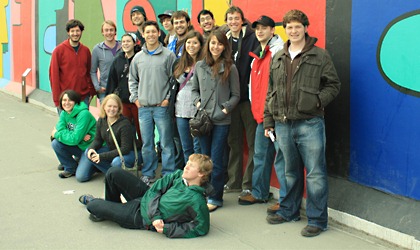
Texas A&M University Students in Berlin

But on the other hand, the lack of precedence is actually an advantage. Games are something that belongs to us. We can decide for ourselves how we want to approach them. And the students I was confronted with turned out to be extremely motivated and ambitious to explore the subject themselves. So the results turned out to be amazing.

Game Genre Timeline

Here is an example of one of the many results – we have complied a sketch of a common time-line for the various game genres.

I have learned a lot during that time. I did quite some research to prepare for lessons. There were some great results from the research the students conducted themselves. I also picked up some intriguing observations. For example it was fascinating to see the shortcomings of written exams from “the other side”. I did a short multiple-choice quiz at the end of the class and some of the students, who have clearly shown genuine interest in the subject, didn’t excel in the quiz. It pretty much confirmed my existing gripes with exams and questionnaires. You often end up testing different things that you think you do.

Anyways, I had a great time and I received some excellent feedback from the students as well. I already have lots of ideas on how to improve the course so I hope I will have an opportunity to conduct that course again next year. I will certainly keep you posted.

Things

Recently I have been listening a bit the the new Kernel Panic podcast show. One of the show’s hosts is @GGlick whom I had some intriguing debates with at Twitter. It’s a bit weird because it is very much an Apple fanboy show and I certainly don’t consider myself one. But on the other hand, widening one’s horizon is a good thing. For example, they mentioned the iPhone App “Things” which I promptly checked out. And I must say, even it was one of the most expensive App I’ve got, it was a very sound investment!

It’s basically a very simple to-do list app. The unique thing about it is that it is based on the “Getting Things Done” organizational method. And even though I’ve never read anything about GTD, using Things I immediately see the advantage. You have things like the Inbox which is a place for you to randomly drop in tasks you just remembered you need to do but don’t have a clue when. You can then later on go through them like through you E-Mail inbox to figure out how to deal with them.

But what really makes this a very effective tool is the Today list. You can mark certain items as things you want to do today. They will then appear prominently in the App itself but also as a small number at the icon of the App. So you are constantly reminded of the things you wanted to do, but only of the things you really CAN do. Tasks, which aren’t important today are stored elsewhere so they don’t bother you as much anymore.

Finally, if you check a task, it doesn’t just disappear or something. It remains in the list for a day but checked-out to give you the good feeling that you’ve managed to get some stuff done. It is being moved to a history folder at the end of the day.

I just started using it but so far I love it. I will keep you posted if I stick with it… and that’s another task checked-out ;-)

A Tip for Musicians Who Want to Get Into Games

What the title says: here is a quick tip for you if you are a musician and want to work on a small game project.

DON’T BE FLEXIBLE!

I discussed that with Tale of Tales when they were here at Clash of Realities and we had similar experiences. It came up quite recently as I’m playing with different game ideas for my next projects. When I’m looking for somebody to do sound or music for me, I’m not interested in flexibility. Don’t say you can do “any style.” Because flexibility means extra-work. It means we need to invest a tremendous amount of time and effort to decide precisely on what kind of style the game needs. It’s an endless back and forth of samples with pages of critique. It involves using samples from other artists to communicate, which in turn may lead to blatant plagiarism. It often even boils down to discussing insanely anal details. In the end the game designer ends up deciding every detail of the music and the musician ends up being the executive. It’s frustrating and inefficient for both parties. And the music you decide on may end up not even being the best quality possible. It’s just the first you both could live with.

What you should do instead is communicating clearly a preferred kind of music and style. Please indulge in you preference and show me the kind of music you like working on. Show me the kind of music you would do on your own if money was no concern for you.

Because what happens is that I may have a vague idea of the vision for the game. I will seek out musicians who seem to fit into this vision. Browsing trough a portfolio with 10 completely different samples is useless to be at that point. I need somebody who I know can pull it off without any additional input. I need somebody I can contact, just ask them to make music for the game and let them do their thing. I can concentrate on the other stuff and the musician can be creative and simply continue doing what they like. Everybody is happy!

Of course this is just my perspective as a small indie. I can imagine that it can be different for larger productions where there are more resources and the where the specific musical style is not that important. On the other hand, when you want to get into games, indie games are the place to start, right?

I was wondering, has any of you experience with sound and music in indie games?

About

The Game Design Scrapbook is a second blog of group of three game designers from Germany. On our first blog, Game Design Reviews we describe some games we played and point out various interesting details. Unfortunately, we found out that we also need some place to collect quick and dirty ideas that pop into our minds. Hence, welcome to Game Design Scrapbook. You will encounter wild, random rantings. Many of then incoherent. Some of them maybe even in German. If you don't like it, you might enjoy Game Design Reviews more.

Twitter

follow Krystian on Twitter
follow Yu-Chung on Twitter
follow Daniel on Twitter