I’m Clicking A Cow

Games researcher Ian Bogost, whom I had the extraordinary pleasure with at this year’s IGF, made a Facebook game called Cow Clicker. It’s an intriguing work.
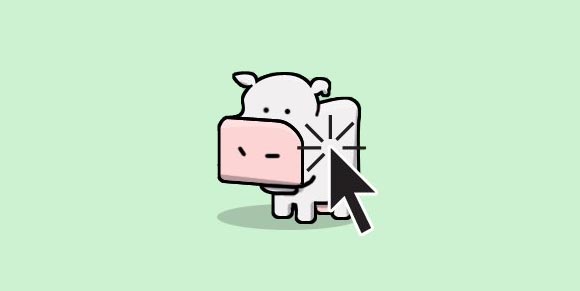
Cow Clicker

“You earn a click every time you click your cow (moo!). Once you click, you’ll have to wait another six hours to click again. Come back regularly to maximize your clicks.”

It’s basically a social game like Farmville stripped down to it’s bare core. It’s so stripped down that it doesn’t even try to dress the fact that all you do is clicking on a cow. But of course, that’s the very idea of the game. It is not a serious attempt at a Social Game. At least not in the same way other Social Games are. It aims at exposing some of the problems with how Social Games work by putting them bluntly.

Ian actually wrote a very intriguing post about some of the philosophy behind the game. It a great piece, that puts my concerns into words much better than I ever could. He mentions 4 problems with Soical Games and calles them Enframing, Compulsion, Optionalism and Destroyed Time. Of the 4, I think Optionalism is what concerns me the most. It’s the fact that you don’t actually do anything in those games.

In search to encourage players to play more digital games almost unintentionally invented and perfected some very good systems to create extrinsic motivations for in-game action. There are some pretty complicated RPG leveling systems, achievements, collectibles, etc. Those systems are good at motivating players but rarely add anything substantial to the game. I think every reasonable designer and even players themselves understand the inherent danger of over-using those systems. Social Games are stripped down from all gameplay and interaction so that only the motivational structures remain. There are no decisions to make in Cow Clicker. The interaction with game elements is reduced to the simplest action possible – clicking a cow. All that is left is collecting virtual money, inviting friends and buying decoration.

But the interesting thing with Cow Clicker is that it is not just an art project – a glorious fail meant to be watched but not engaged in physically. You can actually play it. It’s almost like a joke. By playing the game, you can express that you are in on the joke. And then by playing it, you realize that the motivational structures do work. I catch myself contemplating on paying real money to buy an especially funny cow. Wait! What am I doing here? Am I still on the joke? Am I buying this in an ironic way? Or is the joke on me because I’m spending real money anyway? And how is spending time less humiliating?

I’m reminded of a project I did during my studies. It was conducted by Fiona Raby form Dunne & Raby. She is a rare designer who is doing so-called Critical Design. Basically, she designs products and services that aren’t meant to be real consumer products. Instead, they encourage people to stop, pay attention to and think about all sorts of controversial topics. Here is one example that stuck with me: there is a technology in development to clone human tissue in a vat. It could be used for organ replacement in the future. At Dunne & Raby they came up with a fictitious product of “Victimless Meat”. Imagine a steak made entirely in a lab, that was never a part of a living creature. Would that kind of meat be acceptable for Vegetarians? What if you would push it even further? What if you could clone and sell a human steak? What if you could even make it personal – a steak made out of the DNA of a celebrity or a relative or a person you really hate?

The reason I mention this is that Cow Clicker seems to be a very related project. It’s Critical Game Design. It has the same superficial simplicity and underlying uneasy ambiguity. It exposes you to conflict of values and convictions. In many ways it even goes further. The Dunne & Raby projects are often fictitious. Cow Clicker is real and you can go play it right now.

By the way, if you are interested in some of the thinking behind Critical Design, I recommend a book by Dunne & Raby: Design Noir: The Secret Life of Electronic Objects. And of course, check out the books of Ian Bogost as well! Certainly less ambiguous ways to invest your time and money.

Monster Hunter Podcast Episode 2

monster hunter podcast

There is a fresh Episode of the Monster Hunter Podcast up. This time it’s about Armor. We do a quick explenation of how the Armor Skills work, get into some examples of basic and high rank armor setups as well as noteworthy skills in general.

Get the Episode here.
The RSS Feed is here.
Get us in iTunes here.

The Tumblr Blog here.

Enjoy!

Starcraft II – First Impressions

Don’t have much time. I need to edit the podcast, work on TRAUMA and meanwhile, StarCraft II is rocking my world. So far I have to say: StarCraft II is AMAZING. I was in the beta, no surprises there. It was a solid game where I got repeatedly hammered by superior opponents. But this was only a very limited version of StarCraft II. Now that I got the full-version, it changes everything.

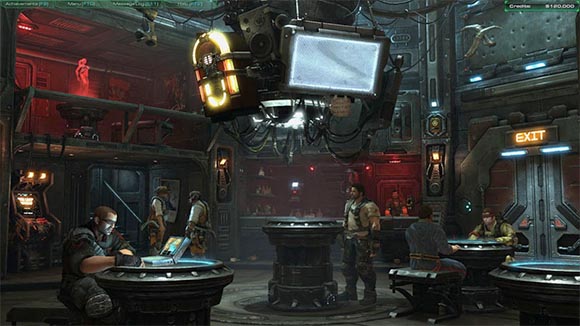
In particular, the single-player part is quite remarkable. Blizzard did a really good job at re-thinking how the single-player part of an RTS should work. For example, a lot of the background story is told by navigating through static, interactive rooms on your mother spaceship and speaking to people in a point-click adventure game fashion. Using the same interface, you can also research or buy upgrades for your troops using at least 3 different systems. From there, you can start into missions. You have always at least two missions to chose from, each belonging to a different plot line.

StarCraft 2 Point And Click

Wait a minute! Who put Point & Click Adventure in my RTS?!

The missions themselves are incredibly polished. Each one is distinct and has a unique game mechanic. One time you are fighting against zombies Zerg infested colonists, the other time you are robbing a train or collecting resources on a planet repeatedly flooded by lava. Each mission has collectibles or special, secondary objectives. Completing them earns achievements or research points you can spend on upgrading your troops back on your mother spaceship.

Surprisingly, the single-player mode features lots of units that don’t come up in multi-player at all. It a bit disappointing not to be able to transfer your experience from single-player to multi-player. On the other hand, it makes single-player more diversified and I presume it allowed Blizzard to keep tweaking the multi-player without breaking the single-player missions.

It all comes together quite nicely. You zoom around from planet to planet. There is a lot of interesting dialogue with various characters on your spaceship. Every missions brings something new to the table and drives one of the many paralell plots along. It feels A LOT like an exciting Space Opera TV series.

I need to get going. However I will probably spend the next few evenings on BattleNet. If you are also playing StarCraft II, let’s team up! My BattleNet E-Mail is

[my last name]@[my first name].de

See you there!

It’s About Time

The Story of Starcraft II takes place 4 years after the events of the first Starcraft game. In real life, it has been 12 years. In most cases there is a time lapse so that stories that span longer periods of time can be enjoyed quickly. This time it’s the other way around. Of course this isn’t the first time where there discrepancy between in-game time and real life goes this way. Still, the 4 years in the story are supposed to represent “a long time”. I find it hilarious. It’s a well-know effect but it falls flat this time. The audience has been waiting for much longer than the in-game characters. In real-life, much more has happened than in the world of Starcraft.

I remember quite well when I got the original version. I bought an early, imported version. I popped it in and the first this I felt was the sting of disappointment. The graphics were still 256 colors. A dated technology even back in 1998. The resolution was 640×480. Cutting edge at that time was 800×600 or even 1024×768 for high-end machines. The game didn’t use 3D technology, which at that time slowly creeping in. Even the interface was a little limited. You could only select 12 units at a time. But it was Starcraft so I kept playing and after the second mission or so, I fell helplessly for it. It was a rare AAA game. It was consciously low-fi. It’s qualities were an incredibly amount of game-play polish and a rock-solid, bug-free technology.

I played quite a lot Starcraft. I played it single-player. I played it on LAN parties with my friends. I even got it to run on a souped-up i486 Notebook, even though the game required at least a Pentium 90. It was also the first game I played on-line – back then on a dial-up connection with a by-the-minute contract. I had an alarm clock to tell me when to stop. The bills shot through the roof anyway and I had to stop. But years later I got my first flatrate DSL and returned to Starcraft for a while. I never got to a competitive level but I was enough to pwn some n00bs.

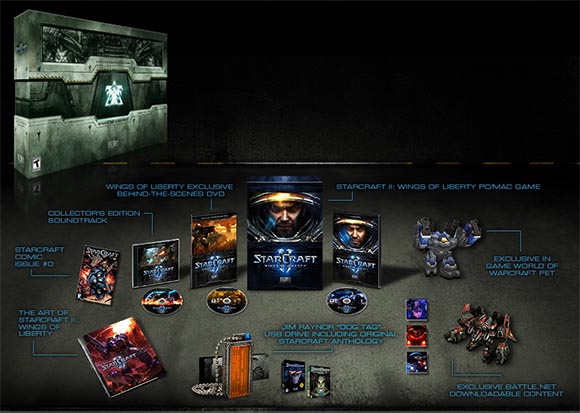
As much as I am looking forward to Starcraft II, I can’t shake the feeling that this is it. This is the end of PC gaming as we know it. This is the last big, single-player, stand-alone PC game that comes in a box. It’s going to be all web-based and downloadable from there on. Hence, I couldn’t deny myself the Collector’s Edition.

StarCraft II Collector's Edition

They literally don’t make then like this anymore.

It looks like it may very well be one of the most impressive, elaborate retail packages ever. A fitting swan song of an era.

Grief and Evilness

I recently saw the Saw movies. Yeah, I know they are horrible. The first movie was just silly. The first sequels were embarrassing. But as the series nowadays consists of 6 (!!!) parts and gathered a solid fanbase, it’s hard to deny that they are doing something right. And indeed all the movies in the series follow a well developed formula. After an initial shocker scene the movie alternates between two storylines. One of them is just a series of scenes where people are being tortured and killed in the most gruesome but spectacular ways. The other storyline is boring filler that mostly centers around the police trying to capture the killer. The second storyline sets up the surprise twist ending. You know, the “ZOMG! It was him all along” kind of ending.

It is a solid formula even if all the constituent parts are shallow and gimmicky. The torture scenes are pointless, impossibly contrived and excessively brutal. However, their voyeuristic appeal is hard to deny. They create almost a kind of a core mechanic. You know what you are in for when you watch a Saw movie. The twist ending is utterly pointless. Often, the revealed information neither makes any sense nor any difference to the plot. However, it does a good job at creating a sense of closure.

One interesting detail is that due to the excessive amount of sequels, the series was able to create quite a mythology. Especially the latter entries have almost a soap opera feel to them. It’s clear that they were made for an audience familiar with all previous episodes.

But what I want to discuss today is something different. Some of the characters in the series stuck me as unbelievable in a special way. I realized that the same mistakes are often done in completely different stories. One of the mistakes are characters motivated by grief. In Saw 3, one of the tortured characters has lost his son a year ago or so. He is completely obsessed with that loss, abandons his other child and indulges in fantasies of revenge. A similar character is the protagonist of Heavy Rain. It’s a father whose life fell apart after he lost one of his sons. Even after a year, he seems utterly depressed and unable to continue his social life and career.

That’s bullshit.

When something terrible happens to a person they will grief but only for a relatively short period. After a couple of weeks they will get over it and continue with their life and maybe only occasionally remember their loss. There was one study where they compared the subjective happiness of people who won the lottery a year ago and people who became paraplegic a year ago. Guess what. Both were EQUAL. Why? Because there is just so much going on in everyday life. There are constantly new events happening that require one’s attention. It’s impossible to concentrate on grief for such a long time. You get bored and distracted after some time.

Of course some people may continue to be depressed for longer periods but that is the symptom of a medical disorder. As it happens I had a severe case of that condition in my family. Such conditions can be triggered by traumatic events but people, who suffer from them make up for poor movie characters. Movie characters usually undergo a so-called arc. They start with a certain flaw and eventually overcome their weakness to become a better person. This doesn’t work so well for clinically depressed people. Their condition doesn’t improve by itself, it needs to be treated, mostly with medicine.

So grief makes up for a poor and unrealistic motivation for a character if the triggering event happened a long time ago. Grief over recent or ongoing events is more plausible.

A different, less common mistake is the portrayal of “evil” characters. In the latter Saw movies, some of the victims are tortured because of some ruthless acts they committed. The are people like over-zealous insurance agents, con artists or loan sharks. When they find themselves in the deadly traps of Saw, they immediately recognize why they deserve the torture and admit that they were “evil”.

Again, that’s bullshit.

The world is not just back and white. There is no such thing like “evil”. But more importantly, nobody ever thinks of themselves as being evil. Even the biggest asshole in the world always creates a plausible explanation for his actions. This can’t be just a shallow excuse but something they deeply believe in. For example, a violent racist genuinely believes that his victims are lesser people who deserve abuse. When confronted with a situation where they are punished for their acts, such people would never recognize themselves as being “evil”. Instead, they would stick to their beliefs and always think of themselves as being innocent and merely misunderstood.

Hey that’s no fair. What if he has iron deficiency?

Of course this model of human psyche undermines the very idea of Saw. In this movie the killer sets up the traps to convince people to stop being “Evil”. If the assholes would behave realistically, the entire purpose of the movie would be defeated. On the other hand, if a story works only when characters behave unrealistically, that’s a sure sign that the story sucks. And yes, I’m looking at you too, Heavy Rain.

I’m Not Iron Man

Since there is not much going on, here is a short update on my general well-being. Due to massive heat waves in Germany, my recent training was somewhat reduced. I still managed to go running and to go the studio at least once a week. I don’t think the reduction had any impact on my fitness, yet. At least as long I will be able to resume a regular schedule this week. However, I’m a little bit depressed that I’m so susceptible to high temperatures.

Even more depressing is that a recent blood analysis revealed that I have a slight iron deficiency. It’s still not clear why. Iron deficiency comes from either from an iron-poor diet or blood loss. I can’t recall loosing any blood recently and I usually enjoy eating meat a lot. It might be the result of not having adapted my diet to my increased training. But I’m not a nutrition expert so I’m not sure if this is a valid explanation at all. I made an appointment with a doctor to get to the bottom of this medical mystery.

One symptom of iron deficiency is fatigue. It’s a very unfortunate symptom as I won’t ever be able to tell if the symptom really shows up or not. I’m staying up late frequently and end up being tired most of the day anyway. But of course now that I know, I will interpret every sign of fatigue as a symptom. I’m a bit of a hypochondriac, but who isn’t?

So all in all, it doesn’t go particularly well at the moment. On the other hand I’m not really sick and actually quite good in shape. And now I even have a great excuse to eat a lot of meat products instead of vegetables. I knew all those salads weren’t actually good for me! ;)

Quitting in TRAUMA

No, I’m not quitting TRAUMA. On the contrary, I just added another feature I kept postponing for way too long. It is now possible to quit a level before completing it. You know, in case you get stuck for example. It was another tricky interface design problem, too. I’m still not 100% sure about my solution.

As you may already know, the entire in-game interface in TRAUMA works with mouse gestures. There is no GUI to speak of, no buttons or menus. The main disadvantage of mouse gestures is that the functions they can trigger are invisible to users. This means that users don’t know how to trigger a function unless the program teaches the gesture somehow. And even then, gestures are easily forgotten unless they users have plenty of opportunities to practice them.

This is OK if the gestures are tied in to puzzles. But the problem is that some functions aren’t meant to be puzzles. Quitting a level is certainly one of such functions. Players will probably want to use it when they get stuck. It should be very easy to execute this function at all times, even when a player doesn’t really understand the gesture interface yet.

This basically disqualifies using a gesture to quit the level. It would be difficult to teach the gesture. Users may not be able to remember and/or trigger it when they need to. On the other extreme, users might trigger it by accident, which would be equally catastrophic.

So I decided to go with a traditional button to quit a level in TRAUMA. Fortunately, I already had a piece of GUI in place that could be combined with this function. When players find certain collectibles in the game, an row of icons slides in from the top of the screen and informs them on their progress. I decided to add a quit button in the upper right corner of that row. I also added a function that would made the row slide in whenever the mouse cursor moves to the top of the screen. Finally I added a special level quit mouse gesture after all and made the quit button look like the mouse gesture.

Quitting in TRAUMA

The row if icons slides in from the top when the you move the mouse to the top of the screen.

This solves a lot of problems. It allows players to check on the progress of the collectibles at all times, which wasn’t possible earlier. It adds the quit button but it’s not constantly in view so it can’t be clicked by accident and doesn’t distract from the visuals. Because the row of icons slides in automatically when players find collectibles, the chance that they miss the button is very slim. The quit button is in the upper-right corner anyway – a popular interface convention. Finally, because the button looks like the quit gesture, it will teach to players the quit gesture and they may chose to use it instead. The gesture looks like a X which should be easy to remember and associate with quitting.

But wait, wasn’t I also concerned that players might trigger the quit gesture by accident? Well, that’s why the quit gesture is special. Until now, all gestures in the game had to be done with one stroke. You would keep the mouse button pressed until the gesture was done. The quit gesture has to be done with two strokes. Players need to draw the first diagonal line, release the mouse button and then quickly draw the second diagonal line. The chance for triggering the gesture accidentally is minimal.

As I’ve said, I’m still not 100% sure about this solution. The thing that concerns me the most is that the collectibles are now a little bit over-exposed. It’s supposed to be sub-quest. Players might now confuse it with the main game objective. I’m also not perfectly happy about mixing icons with buttons and not differentiating visually what is click-able and what is not. Of course there are mouse-over effects but those aren’t obvious on first sight. But I was playing with the idea of making the other icons click-able as well. It could be an alternative way of traveling trough the levels.

In any case, that function is certainly something I will need to playtest thoroughly. Until then, you can help me out by telling me what you think?

The Dwindling of Couch Multi-Player

I had a small gaming evening with 3 friends recently. We started searching for games that could be played with 4 players on one screen. It is a little bit shocking to see how small the selection turned out to be. Granted, we had only the Wii and a non-XBLA enabled Xbox 360. We ended up playing Mario Kart, Mario Strikers, Brain Academy, Rayman Raving Rabbits and Scene It. We also had some fun with Super Street Fighter IV and House of the Dead: Overkill even though those aren’t strictly 4 player games.

By the way, noticed anything significant in that list? Such as the dominance of Wii titles? Just saying.

Especially on the HD consoles, the vast majority of multi-player games seem to be on-line nowadays. It is a bit saddening. It’s lazy too. On-line multi-player doesn’t have to deal with game design challenges such as split-screen or the management of hidden information. And of course, playing the games on-line just doesn’t feel as social as longing on a couch with a bunch of buddies.

Looking for suitable game I found an interesting site, by the way. The blog http://www.co-optimus.com/ lists all games with co-op modes and even tracks them in a very handy database.

And of course you have always the option to simply get a console from the former generations. I think the next time I whip out the Dreamcast for some solid 4 player action.

But I’m curious, did you have some good experience with a couch 4 player mode recently?

Monster Hunter Podcast

The Game Design Review Podcast has been awfully irregular recently. It has become increasingly difficult to get the gang together. I decided to do a smaller, different podcast in-between to keep my podcasting skills fresh.

monster hunter podcast

It’s a podcast about Monster Hunter and it doesn’t really have much to do with game design. But if you enjoy Monster Hunter, it’s certainly something for you. I could convince SocialDissonance and Nick Lalone to join me on the show. Nick wasn’t able to record this time. Instead we have invited another experienced Monster Hunter, naHxelA.

This first show (it’s actually the second but the first got lost) is all about Weapons.

Get the Episode here.
The RSS Feed is here.
I have also created a Tumblr Blog here.

We also need some topics for our upcoming episodes. So we would greatly appreciate any feedback from our listeners.

I’m Big on Lutetia

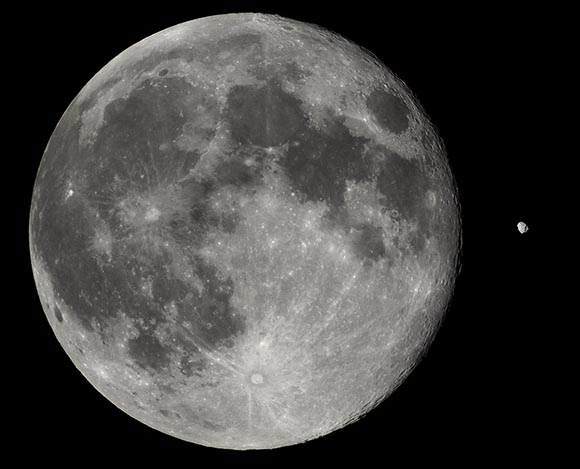
Here is a cool bit of space stuff I just stumbled over. You might remember Lutetia, the biggest asteroid visited by a spacecraft. You might also remember this pic I did, where Lutetia doesn’t look that big actually.

Lutetia and the Moon

I’m swear! It’s way bigger. It was just so cold when the picture was taken.

Well, it always depends on what you compare things to. So over at The Planetary Society I found this chart of ALL asteroids visited by a spacecraft compared to each other. You may want to see the large version.

Asteroids

Click to enlarge… if it’s not big enough.

So yes, Lutetia is a fracking big hunk of metal after all. Little, cool detail: the tiniest asteroid on that chart is Itokawa. It’s still a couple of hundred meters long but compared to the other behemoths, it’s just a few pixels. But that tiny rock is special because Itokawa was the asteroid that the Japanese probe Hayabusa might have brought material from! You see, it all makes sense now.

About

The Game Design Scrapbook is a second blog of group of three game designers from Germany. On our first blog, Game Design Reviews we describe some games we played and point out various interesting details. Unfortunately, we found out that we also need some place to collect quick and dirty ideas that pop into our minds. Hence, welcome to Game Design Scrapbook. You will encounter wild, random rantings. Many of then incoherent. Some of them maybe even in German. If you don't like it, you might enjoy Game Design Reviews more.

Twitter

follow Krystian on Twitter
follow Yu-Chung on Twitter
follow Daniel on Twitter