Anticipating Inception

The movie of the now is obviously Inception. It’s not out yet in Germany but being such a sucker for Christopher Nolan, I decided to watch in anyway. I leave it up it your imagination how that’s possible. I can tell you that it was about as cinematic as having the movie conveyed to you verbally by a drunken hobo with a broken jaw… through a telephone with bad reception… wearing green, smudgy glasses… and the hobo passes out 10 minutes before the ending.

So yeah I have no idea what the movie is about.

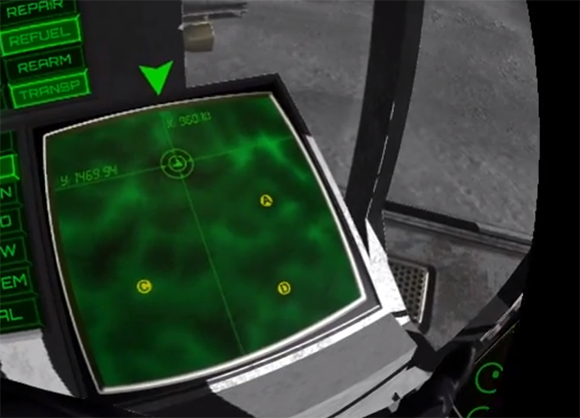
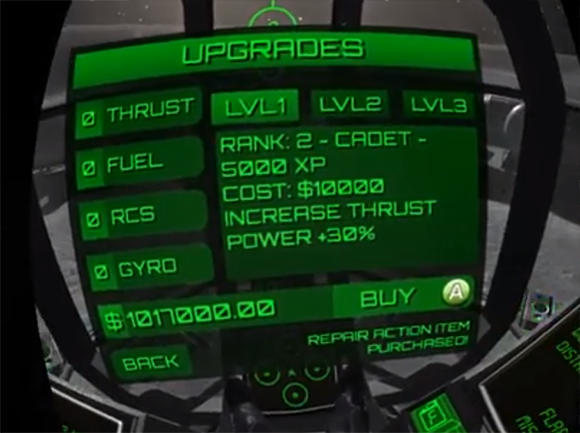
But even in spite of all this I can tell that it is an excellent movie. The few details I picked up were already enough to get my brain working on new game ideas. One of the reasons I respond so well to that particular movie is that there is some significant overlap with TRAUMA, the project I’m currently wrapping up. In fact, in my final thesis I laid out a couple of influences and trends I consciously tied in with TRAUMA. I see some of those influences re-appear again in Inception. It’s a good thing. It means that my process works. It means that I was able to capture and harness a sliver of the Zeitgeist. But it also means that I’m too slow and TRAUMA might suffer from it. Now that Inception came out earlier, some parts may seem to some as if they they were inspired by Inception, even though I probably started my project earlier than Nolan did.

But it’s not that bad. Despite some overlap, there is lots of divergence as well so I should be fine. Overall, the two projects are very dissimilar after all.

Coming back to Inception – I have two interesting articles to share with you if you liked the movie and if you are interested in further discussion. SPOILER COUNTRY. First of, this interview with the actor Dileep Rao does a great job at discussing the plot and potential interpretations. I like especially the following argument. In many movies everything turns out to be a big dream in the end. Rao argues that this is cheap.

The weakness of “It’s all a dream” — why we hate that, why we feel cheated when narratively anything is revealed to be all a dream — is that you’ve just asked me to spend so much time and emotional capital investing in the stakes of this, and you’ve now swept it away with the most anti-narrative structuralism that doesn’t have anything to substitute in its place. It’s laughing at you for even taking it seriously. You don’t want to feel like a victim of the narrative, and I don’t think Christopher Nolan would do that.

The second article comes from Kirk Hamilton, whom I had the pleasure with at this years GDC. It’s a rather negative one for a change. He compares the first half of the movie with a game tutorial and points out how it repeats many mistakes game tutorials do.

Like a game designer who crams too many rules and mechanics into his creation, Nolan expects his viewers to digest and master a bevvy of complex, foreign concepts without giving them the time or the space to do so. As abstractly fascinating as those big ideas are, Inception is the first film I’ve seen that feels like it would have benefited from more playtesting.

It’s very refreshing to hear some well-formulated, negative opinions about the movie. Kirk’s take on this is pretty awesome, too. It really does seem like Inception is one of the first movies we can also analyze by using tools from the critique of videogames. It just made me realize how much more leeway we seem to give to the film medium. Why can they get away with such poor usability? Is it because the medium is older and filmmakers can assume a certain base of expertise among the audience? If that’s the case, will the games of the future be intentionally more cryptic and depend less on tutorials?

Choice in Narratives

Here is an interesting article. It basically describes and compares two different solutions for combining gameplay and narrative. In a nutshell it compares Mass Effect with Fallout 3. I especially like this quote

By closing off the game and opening up the story, BioWare games give me agency where I do not require it, and remove my agency from where I do require it.

There is a lot to discuss when comparing the very different approaches of the two games. I could ramble forever about them and I might some day. But today I would like to focus on one observation. The author of the article points to a really interesting dilemma in creating interactive stores. It’s a dilemma I also observed and which I don’t have a clear answer to yet.

The actor playing Romeo in a production of Romeo and Juliet does not get to decide whether or not he kills Tybalt…

It’s an interesting problem. If you give players the authority to change how a story turns out, it can render the drama of a story obsolete. The Romeo and Juliet example is an excellent one. Imagine the loss of impact if the tragedy of that story could be avoided. On the other hand, not being able to change the overall outcome of a story can render the interaction with that story meaningless. I see three solutions for this problem right now.

  • Emphasis on Dilemma: If there is a good ending and a bad ending, choice becomes trivial (*cough*Heavy Rain*cough*). But what if there would be more emphasis on genuine dilemmas? What if each choice had a serious downside to it? In the Romeo and Juliet example, you could avoid the canon ending but the alternative ending would be equally devastating. GTA4 attempted something similar, but not quite. I still think it was a good try.
     
  • Limit Range of Choice: So far choices in games are diametrical. Save the Little Sisters or KILL THEM! What if the choices were rather nuances than opposites. You always save the Little Sisters but you can either ignore them or try to communicate with them. Depending on how you chose, the story unfolds slightly differently.
     
  • Embrace: Or maybe interactive storytelling is simply very, very different. Maybe a story like Romeo and Juliet simply cannot be told in an interactive way. But maybe that’s OK. There could very well be a whole lot of other narratives and different ideas that cannot be conveyed in a linear, scripted fashion.

I will leave the question open right now but I’m highly interested in you opinion on the subject matter.

Transformers – First Impressions

I’m currently playing the new Transformers: War for Cybertron. I already wrote how I’m a bit of a Transformers enthusiast and how I like how like what High Moon studios did with the franchise. Now I have some hands-on experience to back it up. Here is a nice interview / gameplay presentation that gives a good overview, by the way.

I REALLY like what I’ve seen so far. I’m about 3/4 done with the single-player campaign. Here are a couple of first observations.

  • The Setting was a smart move. They put the action on Cybertron, before Transformers got in contact with humans and started transforming into Ttucks and tapedecks. This has a lot of advantages. They have a lot of freedom with level geometry, there is no reason to come up with crazy explanations for the existence of huge transformer-sized caves on earth. All the interaction with humans tend to be really boring in Transformer stories anyway. Humans just are so fragile and tiny, it’s really difficult to come up with setups where they can have an impact on the Transformers. Plus, you would always get into awkward scenarios where Transformers are killing humans. Another advantage of the Cybertron scenario is that High Moon could do changes to the character design. They got rid of some really stupid lore leftovers such as Megatron transforming into a tiny pistol. It turned out very good!
     
  • They feel alive. One thing I always remember from reading the comics and playing with the toys were the very detailed, elaborate character descriptions. Each robot had a detailed breakdown of it’s abilities, of it’s character traits and it’s weaponry. Due to the sheer count of characters most of the stuff never came up in any of the stories. But here in the game, you can see it live. So you can wield Optimus Prime’s Energon Axe and use his Ion Blaster. The long missions leave plenty of room for some amusing banter between the robots. Especially listening to the Decepticons verbally abuse each other can be quite funny. Generally, the game fully taps into the Transformers lore. It works very well, especially for Transformer enthusiasts.
     
  • Tactical Depth. But the gameplay works well, too. It’s a very solid shooter. Combat is the main mechanic but it also received a good deal of care. At any given point you have an above-average amount of tactical options. You have two slots for weapons, two special abilities that depend on the type of robot you control, one grenade type that can be exchanged by picking up different ones and a melee attack. You can also transform into a vehicle. That gives you up to two new fixed weapons, up to two new abilities and a speed boost. Additionally there are power-ups scattered throughout the levels like shield boosts or heavy weaponry. Disadvantages like limited ammunition and an interesting, semi-regenerative health point system keep things interesting. Given the fact that you fight all the time, there is a lot of variety going on.
     
  • Interface Polish. The game interface has some nice details. For example, I like the chapter selection screen. You can select one of the the 8 chapters. If you have played through a chapter, you can also select a checkpoint within that chapter to re-play a specific scene. The checkpoints all have meaningful names and are even visualized with thumbnail images so if you have played a level, you should have a good idea where a given checkpoint is. Additionally the screen even tells you on which difficulty setting you have completed a chapter. Oh yeah, and it looks good too. All that is missing is some information about collectibles. But even without it, it is simply a very polished piece of interface design.

I’m will finish the game very soon. I think it has a very good length. I don’t know if I will play it on-line and I’m still looking for an angle to do a game design review of it. I’ll let you know if I come up with something.

The Reports of Adventure Games’ Death…

…are greatly exaggerated. Yet you can hear them over and over again. People reminisce how the genre was so popular in the 90ies and is completely dead today. They speculate how the genre may be able to be revived and so forth. Even I wrote my final thesis initially coming from a similar point of view.

But after playing a modern adventure such as The Launch of the Screaming Narwhal, I think one can hardly uphold that image anymore. The evidence has reached critical mass. Let’s face it. Point & Click Adventures are alive and doing quite well.

Monkey Island

See? It’s just like you haven’t even left.

Consider companies like Telltale games alone. They successfully resurrected two Lucasarts franchises. The games have an excellent quality of writing, superb puzzles and the games appear very polished. And they aren’t just milking the old franchises, they also work on their own IPs.

Consider Heavy Rain. Sure it may have it’s flaws. Sure, it may be not even a real adventure game. But it is definitively related and it shows that there are people trying out new things. And that publishers are taking these experiments very seriously.

Consider all the re-makes of old adventure games like the recent Monkey Island 2 Special Edition. Sure it’s not a new game but the re-imagining alone is worth trying them out. Not only because you get better graphics and sound. Not only because you can also play the games on modern platforms such as the iPhone. It also because let’s admit it: most of us haven’t even played all the old classic adventures anyway. What better place to start?

Consider all the European titles. Lots of small companies have been developing adventure games for the last 8 years or so. There are some really cool titles like Secret Files Tunguska, Syberia, The Moment of Silence, Overclocked, Still Life and many, many more. They are all fresh, new franchises and each one comes with a unique, surprising approach. You just need to look for them because the developers rarely have enough budgets for big international marketing.

Consider all the Japanese influences such as Hotel Dusk, Another Code, Phoenix Wright or Zack & Wiki. Again because those games come from entirely different cultures, they bring a whiff of fresh new ideas and approaches. But make no mistake. They are all classic point & click adventures deep inside.

Consider the über-long tail of web-based point & click adventures. Sure there is a lot of crap. But there are also a lot of really imaginative new ideas. It a huge, thriving culture. It’s so big it has it’s own sub-cultures. Escape the room anyone? And where would we be without masterpieces like Don’t Shit your Pants?

Finally, consider the Indies like Wadjet Eye Games, Amanita Design and yes, even yours truly.

Of course, if you expect adventure games to be the dominating cutting-edge AAA titles like in the 90ies then yes – that won’t happen. But that’s not adventure games’ fault. They are the same as always, even better. It’s just that the entire industry changed. The technology is more accessible. The technology adventure games require isn’t cutting-edge anymore. It’s easier and cheaper to produce adventure games now. Also, the budgets for today’s AAA productions are WAY higher than in the 90ies. The budgets for adventure games have been left behind. That’s why adventure games are mostly small and portable today. But that’s ok. Because that means that they are more nimble and easier accessible. That means that they can experiment and that they can surprise.

Adventure games are dead. Long live Adventure games.

How Apple Repairs iPhones

They do it very well. Recently, the on/off (aka “sleep”) button of my iPhone started acting weirdly. It didn’t work sometimes. Other times, it triggered multiple times. It actually seems like a common problem and there are lots of crazy homebrew solutions on YouTube. But since I still had warranty, I decided to send it in.

And BOY was I impressed. Apple gives you two options – you can either send it in by yourself or you can let Apple send you a paid-for shipment box. The first one is faster, the second one is more comfortable. I decided to use the paid-for shipment box. It’s a great piece of design. The box itself looks actually very good, not unlike the box the iPhone is sold in. It improves the quality of the experience but I wouldn’t get persuaded by such details if they were all just superficial. What surprised me is that the box came with an entire manual that explained exactly how to ship your iPhone. The manual includes very precise, step-by-step instructions. It is written in different languages and the instructions actually even differ from country to country because shipping is sometimes handled differently.

iPhone

The black box is actually the box the iPhone came back in. The shipment box was almost the same but white. Also included was a bigger cardboard box with padding to put the smaller, good-looking box in. Again, may be over-the-top but it communicates the concept of “security” pretty well.

An entire manual seems over-the-top but it’s not. Shipping a broken device is a very unpleasant experience. The customer has a lot of questions on his mind. What’s wrong? How long will this take? Do I have to send in the cables? Will they just repair it or replace it? What happens when it arrives and I’m not home? It’s a situation where the customers feels very insecure. Pieces like a well-designed manual communicate that the process is something the company has put a great deal of thought into. They help re-establish a trust that things will turn out to be fine.

In this case, they did. I sent the iPhone in on Monday. It came back the same week in Thursday morning. It’s a new device. I can’t remember if I ever had a service issue solved SO quickly and SO well. I didn’t even have the time to miss the device. It pretty much blew my mind.

It seems to me like Apple thoroughly embraced making sure the service experience is as pleasant as humanly possible. It’s a well-known but seldom-practiced wisdom and I’ve posted about it before. Customers will always judge a company by the worst experience they had with them – The Moment of Truth. An effective way for a company to win the loyalty of customers is to invest in the least pleasant part of the user experience. The ironic thing that this strategy works because it genuinely creates a fair and humane service. The best way to appear sincere is to actually be sincere. You can say a lot about how Apple is full of crap and how they are too expensive. But experiences like that really show that all the disadvantages can be worth dealing with.

Deathspank

Only a quick post today. I have spent most of the day finishing up the interface for TRAUMA. I was still able to check out an important game release. It’s Deathspank! A hilarious Diablo-esque hack & slay action RPG.

Deathspank

I got only the trial version yet (backlog) but I enjoyed it A LOT! The game is incredibly attractive. It comes with a beautiful, cartoony visual style without resorting to obvious cell-shading. It has witty writing and excellent voice acting. It feels very much like a mixture of Diablo and Monkey Island.

I noticed lots of cool details about the way the interface and game mechanics works together. For example, I love how leveling up was implemented. Instead of working your way through a spreadsheet of stats (boring!) you can select one of 4 trading cards. Each card improves one aspect of your character. Your character stats are simply a screen with all the cards you’ve collected.

One thing I found a bit disappointing is the character of Deathspank himself. He doesn’t seem quite as lovable as the other characters. Especially visually he doesn’t seems very memorable. But that may very well be because I haven’t spent too much time with him yet.

By all means, go and check out the game! It’s out on PSN and Xbox Live Arcade. At least get the trial. I think it is a refreshing and very well-made game that deserves attention. I will certainly do my best to make room for it in my backlog!

Monster Hunter Tri Diary 11 – Hunting Together

I have finally spent a few evenings with the multi-player mode of Monster Hunter Tri. I like it although in many ways, it feels like the immature precursor to a hypothetical, much better, future Monster Hunter game.

The entire structure of the multi-player mode feels awkward. The lobbies are hidden in an onion of server types, individual servers, city gates and whatnot. When you finally get into the lobby, they feel too small. You get stuck with just 4 players. Sometimes, important functions are being restricted for no apparent reason. For example, you can’t change you equipment once you’ve accepted a quest. You can’t chat once you declared yourself ready to embark on a quest. You can’t send messages to players, who are already in a quest and there is no function to save a message for later either. You can’t even share and exchange items to help each other out building better items.

Also a lot weaknesses of the game REALLY show in multi-player. The game doesn’t explain the combat or the armor skill systems. But because you fight together with other players, people can get quite far without a firm grasp on how the game works. This can get quite frustrating if you realize mid-battle that it’s you who is doing all the work.

On the other hand, a lot of the things about the game make much more sense on-line. The battles are shorter and much less monotonous, yet they retain their epic feel. The fact that many of the details of the game are not well explained make up for some great discussion topics. All the elements come together and can create a great sense of camaraderie. At times it really feels like a you are in a group of hunters, taking on daunting monsters, exchanging old stories and sharing experience.

I’m still torn on the fact that single-player and multi-player are so separated. The single-player has a lot of useful systems such as fishing and farming. They do a great job a providing a steady supply of useful items. But you can’t access those systems in multi-player. Also the quests in both modes are kept separate. So I even though I beat the game in single-player, I start from scratch an multi-player and need to fight almost the same series of quests all over again. I wish at least some part of all the effort I invested in single-player carried over. But then again, it does! I still can use all my advanced gear and weapons on-line and they do help a lot! Still, I feel like there both modes could have been integrated a little bit better.

I’m going to continue with the multi-player for a few evenings. It turns out the multi-player part has two additional monsters and one of them is really a treat. Being so far in already, I want to see this last bit before I move on.

Windosill

If you don’t know Windosill yet, do yourself a favor and give it a try. It’s a very simple, short and extremely beautiful Flash game.

Windosill

Stare at the hand, be amazed, repeat. Now that’s what I call the circle of awesome.

Windosill could best be described as a point & click adventure. But the game demonstrates quite nicely that old genres conventions fail at describing modern interactive experiences like this one. It consists of 10 screens. In each screen you need to find a cube and put it in a square hole to open the a door on the right and move a toy wagon (protagonist?) to the next screen. Finding the cube always involves interaction with some of the objects visible on the screen.

But the puzzle of finding the cube is only a starting point. Each screen is full of interactive elements. Not all of them are actually part of the puzzle. So the puzzle is just an invite to explore the game world in a playful manner.

There are two things about Windosill I find remarkable. First, the game is incredibly original. It’s full of wonderful, inspiring fresh ideas. You will struggle to find anything you have seen in any other game before. Instead, one delightful surprise follows another. In a landscape of Flash games about Zombies and farming, Windosill feels like a game from another dimension. A dimension where people still have a heart… and a brain.

Artistic games often succumb to over-ambitious goals that their creators simply can’t back up with their limited technical skills. This is the second remarkable thing about Windosill. It is technologically incredibly well-done. It uses a custom 3D engine, lots of custom physics simulations, ragdoll systems, particles, you name it. Simply watching the hand reconstructing the letters on the second screen blows my mind. I already spend at least an hour watching that hand. I constantly switch from being amazed by the vividly eerie animation to being bewildered about the amount of work and development required to make this element work so flawlessly. The attention to detail is astonishing. The hand will turn over letters that face the wrong way. If they are turned too far, it will turn them a little bit, let them go and repeat. It’s a very natural gesture perfectly captured in an incredibly detailed algorythm.

If you want some information on how the game was created, I found this interview it’s designer Patrick Smith on the blog of interaction designer Riccardo Giraldi. The interview features some links to work in progress material for Windosill and other works by Patrick. Check it out!

I saw that Windosill attempted to get into this year’s IGF and I was surprised not seeing it there. I simply can’t really imagine why it wouldn’t be recognized by the judges. I find this unjust and flat out disturbing.

We can at least make things right by spreading the word about this game and/or playing the 3$ for the full version. I assure you, they are very well-spent!

How Lutetia Got Her Groove

It’s super-hot and there is not much new. Let me dwell a post longer on the topic of space.

In Star Trek, when the Enterprise encounters a mystery, it’s usually some really freaky, active phenomenon. I don’t want to even count the many times they found “a lightning storm in space”. It actually so frequent, it shouldn’t be a mystery anymore. The real Solar System is full of mysteries as well, but they appear more subtle. However because they are real, they are so much more exciting. So here is one.

When I saw the images yesterday I immediately noticed the weird grooves on Lutetia’s surface. Why is this weird? Because I saw them before on Phobos, one of the moons of Mars.

Lutetia yesterday (left) and Phobos in 1978 (right)

Lutetia yesterday (left) and Phobos in 1978 (right)

But the thing is that Phobos, although it looks similar, is actually a very different object. It is much smaller and made of entirely different material. Yet both seem to have very similar surface features which are difficult to explain. Especially if you look at the grooves on Phobos. They seem to even go around the rim of the big crater. This means this can’t be a very oblige impact for example. There must be some weird thing going on.

Lutetia and Phobos

A very rough estimate of the size of Lutetia (left) compared to Phobos (right)

But we only saw that phenomenon on Phobos until yesterday so it was safe to assume a very rare, freakish accident happened there. However, the images of Lutetia change everything. Here is a very different object, in a different region of space made of different material. Yet it seems to have a similar, unexplained pattern on it’s surface.

The hypothesis for the streaks on Phobos so far was that the have been excavated by material ejected into space by impacts on the surface of Mars. So basically a cloud of tiny pieces of Mars got into the orbit of Phobos and the moon flew through them.

But if this is true, what kind of clouds left the marks on Lutetia? Or maybe there is a completely different explanation for both patterns? Like, maybe it was a space monster or the Klingons! I’m looking forward to see what kind of conclusion the Rosetta team comes up with! (Spoiler: probably not Klingons)

Finally, if from all this talk on Lutetia and moons you are wondering how bis Lutetia is compared to our very own Moon, I got you covered (again, super-unscientific rough mockup):

Lutetia and the Moon

Our Moon (left) compared to Lutetia (right). Yeah, Lutetia may appear small but keep in mind that the Moon is a very big moon for Solar System standards.

Hello Lutetia!

Quick update on what’s going on in Space right now. The European space probe Rosetta just flew by the biggest asteroid ever visited by a spacecraft and snapped some pictures.

Lutetia

This doesn’t just ROCK. This is HEAVY METAL!

The asteroid in question is called Lutetia. It’s around 100km in diameter and consists probably of… METAL. That’s one huge frigging chunk of metal if you ask me. It’s actually the first metal (M-class) asteroid ever visited by a spacecraft. Lutetia is also a bit weird because even though it’s supposed to consist of metal, previous observations haven’t found signs of metal on its surface. Maybe it’s covered with other stuff? Good thing we came over to find out!

You might ask yourself how come such a big chunk of metal floats in space. Well, that’s a funny story. The theory goes like this: When the solar system was young, it was full of smaller planets, so-called protoplanets. But because they were all over the place they started smashing into each other. Today’s planets are the only ones that survived. The rest got either smashed into pieces, fell into the sun, got ejected from the solar system or became part of today’s planets. Actually, one of the protoplanets is said to be responsible for the creation of the Moon.

So what does it have to do with Lutetia? Well, the theory goes that Lutetia is actually a chunk from the core of one of the smashed protoplanets. Some protoplanets collided, exploded into pieces and huge drops of magma from their molten metal cores cooled off and became the M-class asteroids. At least that’s the theory. Lutetia seems to have a more complicated history since it appears consist of other materials as well. And it’s not the biggest metal asteroid either. One I would REALLY like to see visited one day would be Psyche. It is 10 times as massive as Lutetia, has over twice the diameter and radar observations suggest that it is made pretty much entirely of iron and nickel. It is very probably an exposed metallic core of a former protoplanet.

Is that useful information for Sci-Fi? Well, both Asteroids are massive and huge. If they collided with Earth they would easily completely wipe out all life. To give you some perspective, the asteroid that probably killed the Dinosaurs was only around 10km in diameter, only one-tenth of Lutetia’s diameter.

M-Class asteroids could be a cool target to do asteroid mining. They consist of precious metals after all. But contrary to popular belief, bringing the resources back to Earth to sell them doesn’t make much sense. The transport costs would be prohibitive. You know, mining is not exactly a great way to make money nowadays. Instead, the metal could be used for construction of stuff in space. M-Class asteroids are rare so they could be a nice, scarce resource a conflict in a strategy game could center around.

So that’s it for today. The next time we are going to hear from Rosetta is 2014, when it will go into an orbit of a comet. I can’t wait!

About

The Game Design Scrapbook is a second blog of group of three game designers from Germany. On our first blog, Game Design Reviews we describe some games we played and point out various interesting details. Unfortunately, we found out that we also need some place to collect quick and dirty ideas that pop into our minds. Hence, welcome to Game Design Scrapbook. You will encounter wild, random rantings. Many of then incoherent. Some of them maybe even in German. If you don't like it, you might enjoy Game Design Reviews more.

Twitter

follow Krystian on Twitter
follow Yu-Chung on Twitter
follow Fabricio on Twitter